
Introduction
A CCTV camera can be an important part of a modern security system, but simply installing cameras does not guarantee effective surveillance. A system may have high-resolution cameras and advanced features, yet still fail to capture useful footage if the cameras are positioned incorrectly, lighting is poor, storage is insufficient, or network security is overlooked.
This is why CCTV installation requires careful planning. The objective should not be to install as many cameras as possible, but to create suitable coverage of important areas while maintaining reliable recording and responsible data management.
Whether surveillance is being planned for a home, office, retail store, warehouse, school, or industrial facility, understanding common installation problems can help users build a more effective security setup.
1. Choosing Cameras Without Considering the Location
One of the most common problems is selecting a camera first and deciding where to install it later. Different environments have different surveillance requirements.
An indoor office may need a compact dome camera, while an outdoor entrance may require a weather-resistant camera capable of handling changing lighting conditions. A large parking area may benefit from a camera with a wider viewing range or PTZ functionality.
Before purchasing equipment, consider:
- Indoor or outdoor location
- Required viewing distance
- Available lighting
- Expected weather exposure
- Required image detail
- Available power and network connections
- Areas that require continuous monitoring
Choosing cameras according to the environment is an essential part of effective CCTV installation.
2. Installing Cameras Without Checking Blind Spots
A camera can only monitor the area visible within its field of view. Poor positioning can leave important areas completely uncovered.
For example, installing a camera directly above an entrance without considering the angle may capture the top of a person’s head rather than useful facial details. Similarly, furniture, walls, pillars, trees, or vehicles can obstruct the camera’s view.
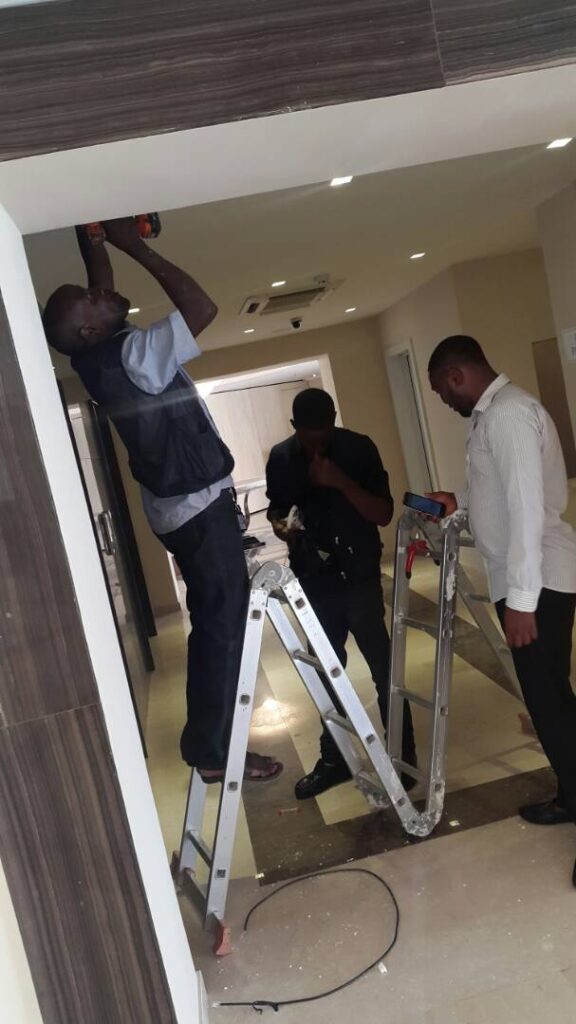
During CCTV Installation, identify important areas such as:
- Main entrances and exits
- Parking areas
- Stairways and corridors
- Reception areas
- Storage rooms
- Cash counters
- Restricted-access zones
- Building perimeters
A simple coverage plan before installation can help identify potential blind spots.
3. Ignoring Lighting Conditions
Good camera resolution cannot completely compensate for poor lighting. Strong sunlight, shadows, darkness, reflections, and bright lights can affect the quality of recorded footage.
For outdoor cameras, the position of the sun should be considered. A camera pointed directly toward strong sunlight may produce footage with excessive glare or silhouettes.
For nighttime surveillance, cameras with appropriate low-light or infrared capabilities may be required. However, even night-vision cameras need suitable positioning to produce useful images.
Testing cameras at different times of the day is therefore an important part of surveillance camera installation.
4. Selecting Insufficient Storage
Another frequently overlooked issue is storage capacity. CCTV systems can generate a large amount of video data, particularly when cameras record continuously at high resolution.
Storage requirements depend on factors such as:
- Number of cameras
- Video resolution
- Frame rate
- Recording duration
- Continuous or motion-based recording
- Retention period
Before installing a CCTV security system, determine how many days of footage need to be retained. A system that runs out of storage too quickly may overwrite important recordings.
Users should also consider the reliability and security of the storage device. Important footage should be protected from accidental deletion and unauthorized access.
5. Treating Network Security as an Afterthought
Modern IP and wireless CCTV cameras can connect to networks and the internet, providing convenient remote monitoring. However, connectivity also introduces cybersecurity considerations.
Using default usernames or weak passwords can increase the risk of unauthorized access. Outdated firmware can also expose connected devices to known security vulnerabilities.
Good practices include:
- Change default passwords immediately.
- Use strong and unique passwords.
- Keep camera firmware updated.
- Restrict access to authorized users.
- Secure the Wi-Fi network.
- Disable unnecessary features or services.
- Review user permissions regularly.
A secure camera system should protect both the physical location and the digital information generated by the cameras.
6. Forgetting About Power Backup
CCTV cameras depend on a stable power supply. During power interruptions, cameras or recording equipment may stop working unless an appropriate backup system is available.
For locations where continuous surveillance is important, users should evaluate whether an uninterruptible power supply (UPS) or another backup solution is appropriate.
It is also important to remember that cameras are not the only devices requiring power. Network switches, routers, recorders, and other equipment may also need backup power to maintain the complete surveillance system.
7. Installing Cameras Too High or Too Low
Camera height can significantly affect the usefulness of recorded footage.
If a camera is installed too high, it may provide a broad overview but capture insufficient detail. If installed too low, it may become vulnerable to accidental damage or tampering.
The ideal height depends on the camera type, location, viewing angle, and security requirements. The goal should be to achieve useful coverage while keeping the equipment appropriately protected.
Testing the camera angle before permanently fixing the device can prevent unnecessary adjustments later.
8. Neglecting Regular Maintenance
CCTV installation is not the end of the process. Cameras and recording systems require periodic maintenance.
Outdoor cameras can accumulate dust, water spots, insects, or other debris on their lenses. Cables and connectors can also deteriorate over time.
A basic maintenance routine should include:
- Cleaning camera lenses
- Checking camera angles
- Testing night vision
- Reviewing recording status
- Checking storage capacity
- Inspecting cables and connectors
- Updating firmware
- Testing remote access
- Reviewing system alerts
Regular checks can help identify problems before an important incident occurs.
9. Ignoring Privacy Considerations
Surveillance should be used responsibly. Cameras should be positioned to monitor legitimate security areas without unnecessarily recording private spaces.
Businesses and property owners should understand applicable privacy and surveillance regulations before implementing a system. Access to recorded footage should also be limited to authorized individuals.
Clear policies regarding who can view, store, copy, and share surveillance footage can help reduce privacy risks.
How to Plan Better CCTV Installation
A successful surveillance setup begins with planning rather than equipment selection alone.
Start by identifying security objectives and important monitoring areas. Then evaluate lighting, camera angles, power availability, network connectivity, storage requirements, and privacy considerations.
A useful installation plan should answer several questions:
What needs to be monitored?
Identify important locations and potential security risks.
What level of detail is required?
Determine whether general activity monitoring or identification-level footage is needed.
How long should footage be stored?
Estimate storage requirements based on recording settings and retention needs.
Who should have access?
Define authorized users and implement appropriate access controls.
How will the system be maintained?
Create a schedule for inspections, cleaning, updates, and testing.
Conclusion
Effective CCTV installation is about much more than mounting cameras on walls and connecting cables. Camera selection, placement, lighting, storage, network security, power backup, maintenance, and privacy all influence the overall effectiveness of a surveillance system.
Avoiding common installation mistakes can improve coverage, reduce blind spots, protect recorded footage, and help ensure that the system performs reliably when it is actually needed.
A well-planned CCTV system should focus on the specific security requirements of the location rather than simply using the latest or most expensive technology. Careful planning and regular maintenance are often just as important as the camera specifications themselves.