Introduction
Today, many website owners and digital marketers are asking the same question: Is SEO Dead or alive?Imagine you have a website where you publish useful articles, share information, and answer people’s questions. You have spent hours creating good content, but nobody visits your website. How would you feel?
You might start wondering whether SEO is still worth your time.
A few years ago, getting traffic from Google was one of the main goals of almost every website owner. People focused on keywords, backlinks, website speed, and content quality. But things have changed. Artificial intelligence, AI-powered search, voice search, and new search platforms have changed the way people find information online. Is SEO Dead or Alive is one of the most common questions among bloggers and digital marketers in 2026.
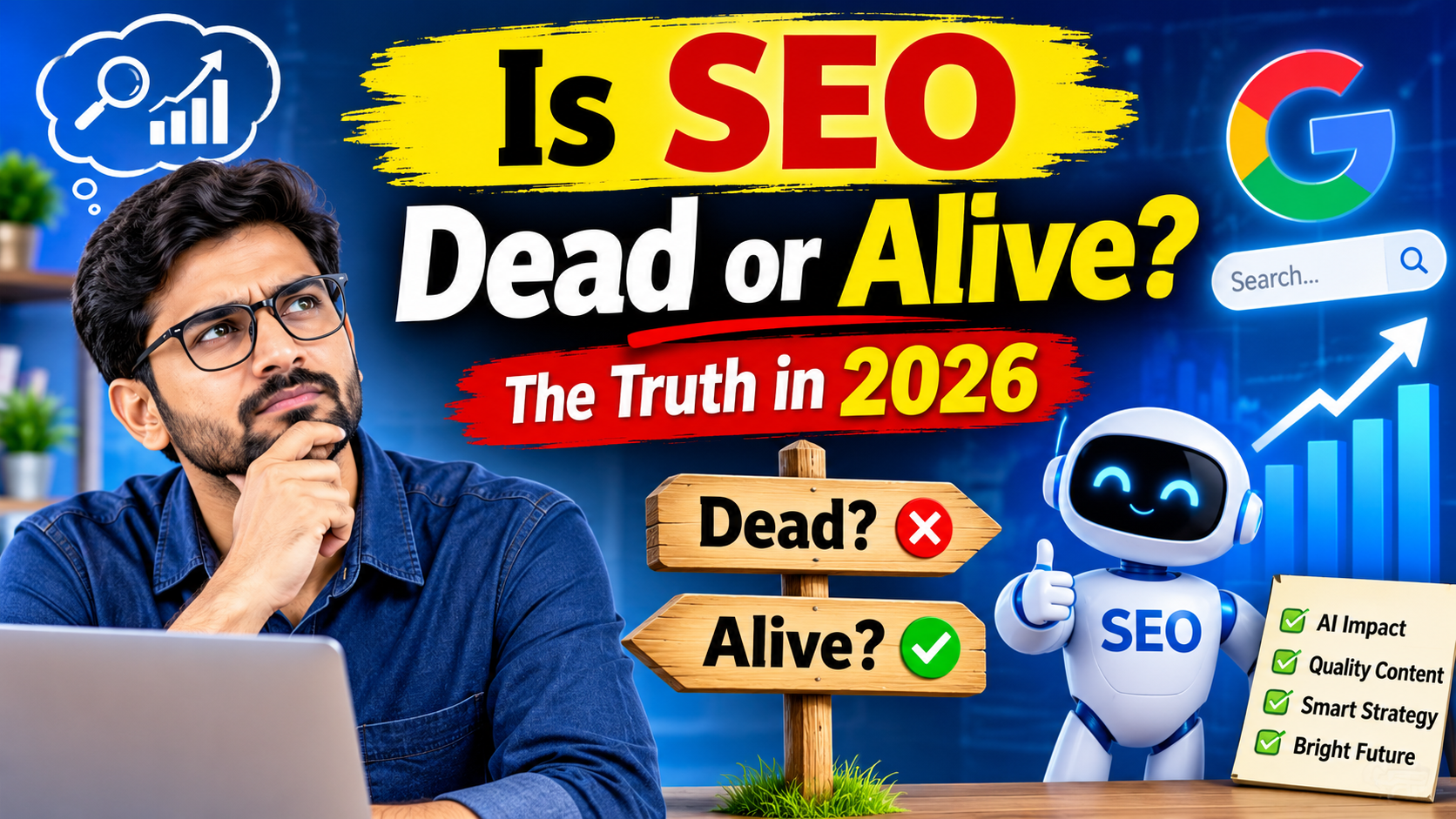
Some people believe SEO is losing its value because AI tools can provide answers within seconds. Others believe SEO is still important but requires a new approach.
So, what is the truth?
Let’s discuss it in a simple way.
1. Is SEO Dead or Alive in 2026?
Let’s start with the main question.
No, SEO is not dead. It is very much alive, but the way we do SEO is changing.
Think about how people searched for information five or ten years ago. They usually opened Google, typed a few words, and visited different websites to find an answer.
Today, things are different.
People use Google, YouTube, ChatGPT, voice assistants, and AI-powered search features to find information. They want quick, useful, and clear answers.
Does this mean websites and SEO have no future?
Not at all.
Search engines still need useful information from websites. They need quality content to understand topics, compare information, and provide relevant answers.
The biggest change is that SEO is no longer only about ranking a webpage on Google. It is also about making your content useful, trustworthy, easy to understand, and easy for search systems to discover.
That is why asking Is SEO Dead or alive is important for anyone working in digital marketing.
2. Why Do People Think SEO Is Dead?
There are several reasons why people believe SEO is losing its importance.
Let’s understand the main ones.
AI Is Changing Search Behaviour
AI tools have changed the way people search for information.
For example, earlier, if someone wanted to know about the best laptops for students, they would search on Google and visit different websites. Many website owners are wondering whether Is SEO Dead or Alive is still a relevant question in the age of artificial intelligence.
Now, they can ask an AI tool to compare laptops and provide a quick answer.
This has created a new challenge for website owners. Some users may get the information they need without visiting a website.
However, AI tools still depend on information available across the internet. Good websites, reliable sources, and helpful content continue to play an important role.
More Competition on Google
Another reason is increasing competition.
Today, almost every business has a website. Thousands of blogs are published every day on different topics.
Imagine writing an article about digital marketing. You are competing with websites that have years of experience, strong backlinks, and a large audience.
Simply publishing an article is not enough anymore.
You need to understand what people are searching for and provide something useful that other articles may be missing.
Search Engine Updates
Google regularly updates its search systems to improve the quality of search results.
Sometimes, websites experience a drop in traffic after an update.
This can make website owners feel that SEO is no longer working.
But search engine updates do not mean SEO is dead. They show that search engines are trying to provide better results to users.
The lesson is simple: focus on people instead of trying to find shortcuts.
3. How Has SEO Changed Over the Years?
SEO has changed a lot since its early days.
Earlier, some website owners used to repeat the same keyword many times in an article. They believed this would help their pages rank higher. If you understand modern SEO practices, you will realise that Is SEO Dead or Alive is more than just a discussion.
For example, if someone wanted to rank for “best mobile phones”, they might use that keyword in almost every paragraph.
But search engines have become much smarter.
Today, they look at several factors, including:
- Content quality and usefulness.
- Search intent.
- Website experience and page speed.
- Internal and external links.
- Website structure.
- Content relevance.
- Trust and expertise.
- Mobile-friendly design.
Modern SEO is more about helping users find the right information than simply adding keywords to a webpage.
This is one of the biggest reasons why the discussion around Is SEO Dead or alive has become so popular.
4. Does AI Mean the End of Traditional SEO?
This is a very common question among bloggers and digital marketers.
My answer is no.
AI is changing SEO, but it is not removing the need for it.
Think about it this way. If you own a travel website and publish an article about the history of a famous fort, you need to provide accurate information, useful details, and a good reading experience.
An AI tool may help someone understand the topic quickly. However, readers may still want to explore photographs, travel routes, local information, historical details, and personal experiences. The question Is SEO Dead or Alive has become popular because AI tools are changing how people search for information.
That is where a useful website can offer more value.
AI can also help content writers with research, topic ideas, outlines, and editing. But blindly publishing AI-generated articles without checking facts or adding real value is not a good long-term strategy.
Use AI as a helper, not as a replacement for knowledge and experience.
5. Is Keyword Research Still Important?
Yes, keyword research is still an important part of SEO.
However, the approach has changed.
Earlier, many people selected keywords only by looking at search volume and competition.
Today, understanding search intent is equally important.
Let’s take an example.
Suppose someone searches for “What is SEO?”
They are probably looking for a simple explanation.
But if someone searches for “Best SEO tools for small businesses”, they may be looking for tool comparisons and recommendations.
Both searches are related to SEO, but the user’s purpose is different.
Before writing an article, ask yourself:
- What does the reader want to know?
- Is the reader looking for information or a solution?
- What questions might the reader have?
- Can I explain the topic better with examples?
Good keyword research starts with understanding people.
6. Why Quality Content Still Matters
Let me ask you something.
If you visit a website and find an article that contains repeated information, long introductions, and no useful answers, would you read the entire article? When we discuss Is SEO Dead or Alive, we must also understand the impact of Google updates and AI-powered search.
Probably not.
Readers want information that solves their problems.
For example, if you are writing about laptop buying tips, do not simply list laptop specifications. Explain what those specifications mean and who should choose which type of laptop.
Similarly, if you are writing about travel, include useful information such as location, history, transport options, important places to visit, and practical travel tips.
Good content should answer questions rather than simply fill a webpage with words.
This is why quality content remains one of the most important parts of SEO.
7. The Importance of Technical SEO
Content is important, but your website should also work properly.
Imagine writing a very useful article, but your website takes 10 seconds to load. Many visitors may leave before reading it. For bloggers and businesses, knowing Is SEO Dead or Alive can help them plan better digital marketing strategies.
That is why technical SEO matters.
Here are some important areas to focus on:
Website Speed: Make sure your website loads quickly on desktop and mobile devices.
Mobile-Friendly Design: Your website should be easy to use on smartphones.
HTTPS Security: Use a secure connection for your website.
XML Sitemap: Help search engines discover important website pages.
Robots.txt: Guide search engine crawlers about which parts of your website they can access.
Broken Links: Check and fix links that lead to missing pages.
Structured Data: Use relevant schema markup to help search engines understand your content.
These activities help build a technically healthy website.
8. Can Small Websites Still Rank on Google?
Of course!
You do not always need a huge website or thousands of backlinks to get organic traffic.
Small websites can also perform well when they focus on a specific topic and provide useful information. Although search technology is changing, Is SEO Dead or Alive remains an important topic for anyone working in SEO.
For example, imagine you have a website about technology.
Instead of publishing articles on every possible topic, start with a few areas where you can provide good information.
You could write about:
- Laptop buying guides.
- Computer tips and tricks.
- Useful software.
- Mobile technology.
- Digital marketing basics.
Create helpful articles around these topics and connect related pages through internal links.
Over time, your website can build useful topic coverage.
Do not expect results overnight. SEO takes time, effort, and regular improvement.
9. What Should You Focus on for SEO in 2026?
If you want to work on SEO today, I would suggest focusing on these areas:
- Helpful Content: Write articles that solve real problems.
- Search Intent: Understand why people search for a particular keyword.
- Topical Coverage: Cover your main subject in enough detail.
- On-Page SEO: Use clear titles, headings, URLs, and relevant keywords.
- Technical SEO: Keep your website fast, secure, and easy to crawl.
- Quality Backlinks: Build genuine links from relevant and trusted websites.
- User Experience: Make your website easy to read and navigate.
- Content Updates: Review old articles and update outdated information.
- Multiple Platforms: Build an audience through Google, YouTube, and other relevant platforms.
- Performance Tracking: Use Google Search Console and Google Analytics to understand your website’s performance.
Do not try to do everything in one day. Start with the basics and improve your website step by step.
10. Personal Experience: What I Have Learned About SEO
From my experience in digital marketing and SEO, one thing I have learned is that SEO is not a one-day activity.
When I started learning SEO, I thought that keyword placement and backlinks were the most important things. I gradually understood that SEO involves much more than that.
You need to understand how search engines work, how people search for information, and what makes them stay on a website.
I have also learned that every website has different needs. A technology website and a travel website cannot follow exactly the same content strategy.
For a technology website, readers may want product comparisons, specifications, and buying advice. For a travel website, they may want history, location details, travel routes, and interesting facts.
Another important lesson is that rankings and traffic can change. Sometimes, an article performs well, while another article takes months to get attention.
That is why I believe we should not depend only on search rankings. We should focus on creating useful content and building a website that readers trust.
AI has made content creation easier, but research, editing, fact-checking, and real knowledge are still important.
In my opinion, people who keep learning and adapting will continue to find opportunities in SEO.
Conclusion: Is SEO Dead or Alive?
So, after discussing everything, what is the final answer?
SEO is alive, but it is evolving.
The old approach of repeating keywords, creating low-quality backlinks, and publishing articles just for search engines is becoming less useful.
Today, SEO needs a better understanding of search intent, helpful content, website experience, technical health, and user trust.
AI has changed the search industry, but it has also created new opportunities for people who know how to create useful information.
If you are a blogger, website owner, or digital marketer, do not stop learning SEO because of AI.
Instead, understand the changes, improve your skills, and focus on your audience.
Remember one simple thing: search engines may change, technology may change, and user behaviour may change, but people will always need useful and reliable information.
That is why SEO still has a future.
Frequently Asked Questions (FAQs)
1. Is SEO Dead or alive in 2026?
SEO is still alive in 2026. However, it is changing because of AI-powered search, new search habits, and improvements in search engine technology.
2. Will AI replace SEO?
No, AI is not expected tor completely replace SEO. It is changing how people discover information, but websites still need to be discoverable and provide useful content.
3. Is SEO still worth learning?
Yes. SEO remains a useful digital marketing skill for bloggers, businesses, website owners, and digital marketers.
4. Does keyword research still matter?
Yes. Keyword research helps you understand what people are searching for. However, search intent and content relevance are also very important.
5. Can a new website rank on Google?
Yes. A new website can rank on Google by publishing helpful content, following good SEO practices, maintaining technical health, and building relevant website authority. Results may take time.
6. How long does SEO take to show results?
There is no fixed timeline. Depending on competition, website history, content quality, and other factors, SEO may take several months to show meaningful results.
7. Will backlinks still matter in the future?
Relevant and trustworthy backlinks can still help search engines understand a website’s reputation and connections. However, buying large numbers of low-quality links is not a good strategy.
8. What is the future of SEO?
The future of SEO will involve AI-powered search, helpful content, user experience, technical improvements, and better ways to understand search intent.
Final Thought: SEO is not about tricking Google. It is about helping the right people find the right information at the right time.